
Conventional assessment
Useful operational baselines, reported as population averages.
Total motility88%
Progressive motility76%
Cell count2.6B
A normal average cannot show which individual sperm are functionally complete.
Reproductive intelligence, cell by cell
Identify the predicted fertile sperm subpopulation hiding inside a normal-looking ejaculate. Advanced single-cell phenotyping for boar and bull.
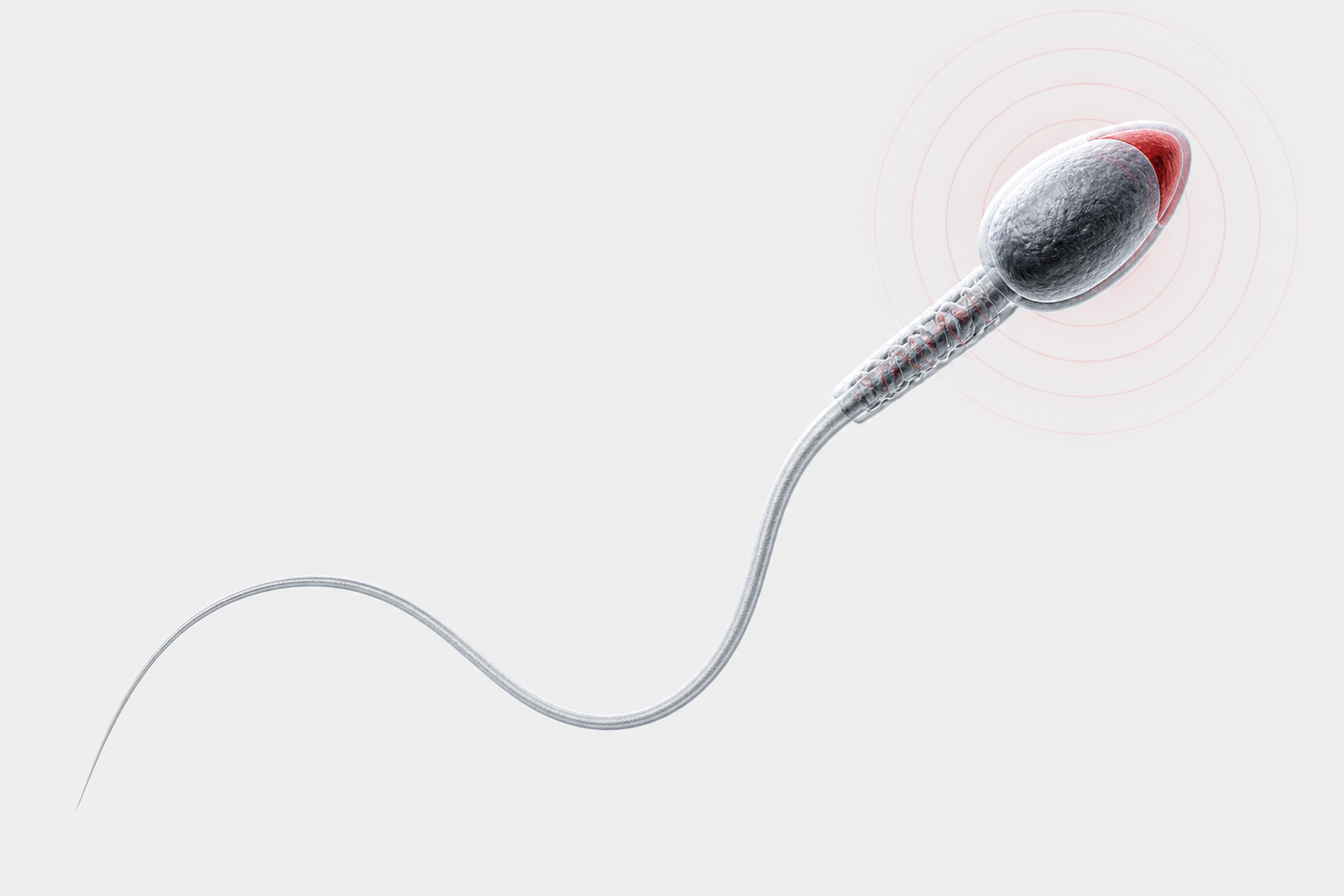
CELL / 084271
PREDICTED FERTILE SIGNATURE
THE QUESTION ISN’T “HOW GOOD IS THE AVERAGE?”
It’s “which cells can actually fertilize?”The preamble
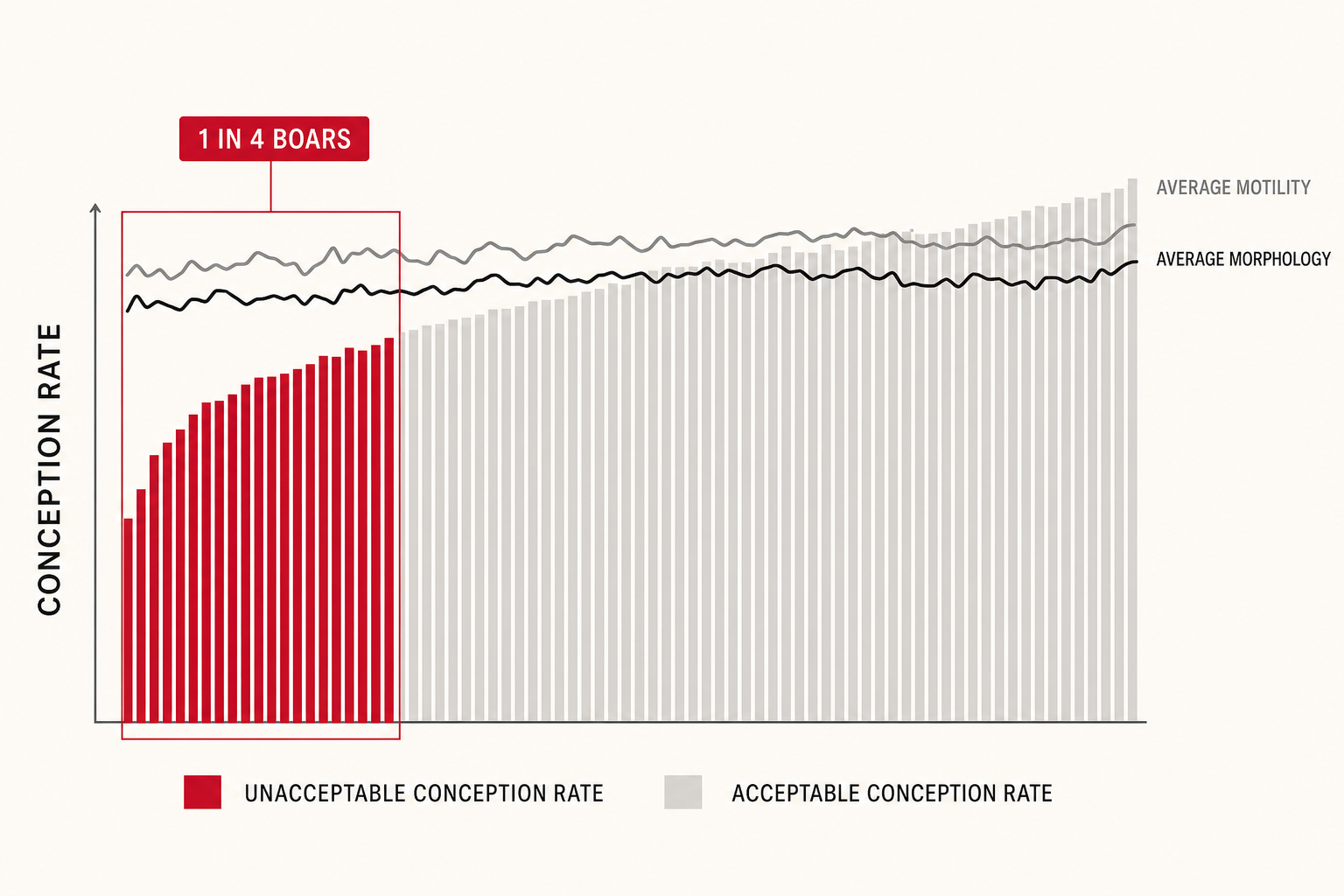
Conventional semen measures can look acceptable while fertility varies dramatically. In a commercial boar dataset, one in four sires fell below 80% conception despite acceptable motility and morphology.
For decades, the field largely treated every live, normal-appearing sperm as equally capable of fertilization. The competing model recognizes functional heterogeneity: only a distinct subpopulation carries the complete combination of traits required to fertilize.
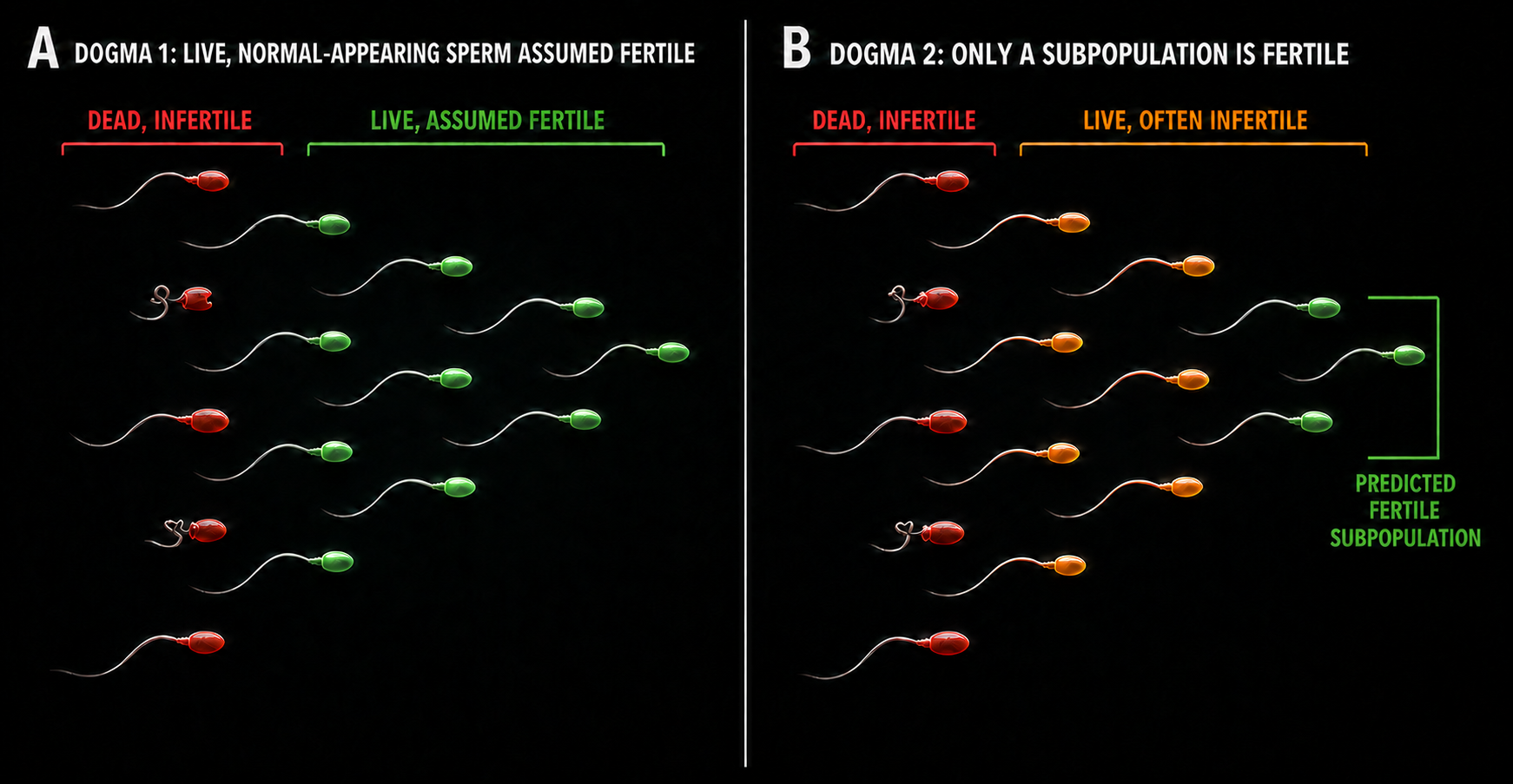
Sperm Intelligence is built for Dogma 02: identify the predicted fertile subpopulation, measure it, and learn what makes it different.
Each level adds information. Only the single-cell layer preserves which traits occur together and whether a high-value predicted fertile subpopulation is present.
Useful operational baselines, reported as population averages.
A normal average cannot show which individual sperm are functionally complete.
Better biology, but still averaged across the whole sample.
Independent averages do not reveal whether favorable traits belong to the same cells.
Linked traits, per cell, across the whole ejaculate.
Only cells favorable across morphology and the biomarker panel are classified as predicted fertile.
Motility does not predict biomarker status. It provides a separate functional view of how sperm move, revealing distinct behavioral subpopulations that disappear inside total and progressive motility averages.
DRAG TO ROTATE / MOTILITY FEATURES ONLY
Longitudinal sire monitoring, subpopulation-aware motility, early-warning signals and decision support for conventional and reduced-dose breeding programs.
Become a Partner →Single-cell insight across fresh and frozen semen, connecting functional subpopulations to field fertility and emerging breeding technologies.
Become a Partner →From laboratory to live operations
Coming soon: secure API access designed to connect the latest sample status, sire trends and decision-ready signals directly to breeding, laboratory and production systems.
Discuss integration ↗GET /v1/sires/BR-1042/latest
{
predicted_fertile_subpopulation: 0.186,
trend: +2.4%,
alert: false,
updated: live
}Standardized image-based flow cytometry and AI-assisted analysis create a digital archive that becomes more valuable as new phenotypes, markers and models are validated.
Coded samples enter a standardized confidential workflow.
Morphology, motility and biomarkers are linked per cell.
Results are compared with historical and de-identified references.
Dashboards and APIs deliver signals into live operations.
Context turns a result into a decision
Compare collections over time to identify meaningful shifts from each sire’s own baseline.
Compare contemporary sires under your genetics, handling and production conditions.
Opt in to de-identified consortium references for broader context and stronger prediction.
Your identifiable results remain confidential. Shared benchmarking uses de-identified, appropriately nested data so biological differences are not confused with genetics or program effects.
Designed to complement, not replace
Routine semen analysis and Sperm Intelligence answer different questions. Third-party laboratories remain the experts for cell count and concentration, pH, osmolarity, bacterial status and everyday quality control. Our focus is narrower: the cellular biology associated with sperm fertility.
Connect your trusted laboratory or private consultant directly to your program. We work side by side with existing partners, adding a specialized fertility layer to the services they already provide.
Every organization receives confidential results and controls how its data supports future model development.
Your data can contribute to a larger de-identified model while remaining nested and corrected for your genetics. As the shared evidence grows, your program gains access to stronger fertility prediction and broader benchmarking.
Keep your data in a private model that does not contribute to the consortium model. You still gain the platform, standardized pipeline and your own results, but not the prediction gains created by the larger shared dataset.
Grant controlled access to your private consultants, breeding specialists or third-party andrology laboratory so they can interpret results and work beside your team.